Posts

St George's Mushrooms Arrive
Image
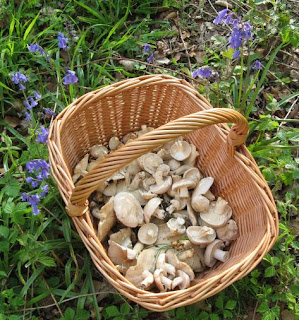
In a break from my garden posts, here is one about wild mushrooms - St George's mushrooms. St George's is one of my favourite wild mushrooms, partly because its arrival heralds the arrival of warmer weather and the opening of the mushroom season. The mushroom gets its name from the fact that it appears around St George's day (23rd April). They disappear when the weather starts to get hot in June. The best indicator of when to start looking for it is just as the bluebells start to flower. I often find it among bluebells and wild garlic. It often grows in grass alongside paths and even roads. I have even found them under a tree in a National Trust car park, but my special place for them is a traditional parkland. They are a comparatively good mushroom for beginners, as they come at a time of year when there are few mushrooms around. If St George's grew in summer or autumn even I would think twice about picking them, as the white form of the death cap and the destro...
More Winter Survivors

Image
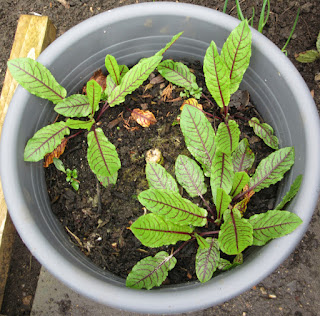
Before I turn the blog's focus onto the new growth, let's look at the plants that have managed to survive the winter. The first of these is red-veined sorrel (above), which I planted in a container in the summer and rather forgot about. Now it is beginning to put on a fantastic show. I love the contrast of burgundy red veins against the lime-green leaves. It seems a shame to pick it. But it adds a nice lemony taste to salads, not to say anything about the visual impact it has. I will leave it a while until it gets some more growth before I start cropping it for salads and as a spinach substitute. Talking of spinach - my Czech winter spinach is thriving. I took this photo a couple of days ago and now you would hard pressed to see the soil between the plants. It was never covered despite the bitter cold and the snow. It will soon bolt with the spring warmth, but I will keep cropping it while I can. Another winter wonder has been my red Russian kale. It has croppe...

Winter salad

Image
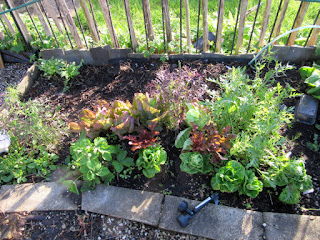
With the brief onset of summer (before the return of the cold spring winds) I have removed the pvc cover from the winter cloche. Underneath the cloche the lettuces that have been providing salad leaves for months were still going strong. I have been harvesting outer leaves regularly for the plate, but recently have been having to share them with slugs. Hopefully the removal of protection will help with the slug problem by allowing predators (including me) to get at the slimy bastards. If you ask me what was my favourite veg, I would have to say lettuce. In the summer I eat it nearly every day and ideally I would like to do the same in winter, but would settle for once a week. The lettuces I grew over winter under the cloche were winter density, marveille des quatre saisons, and red salad bowl.  Also under the cloche were rocket (now beginning to bolt), red frills mustard, and a woodland strawberry (already showing flowers). The pak choi has been removed, as it bolted a fe...

So much is happening

Image
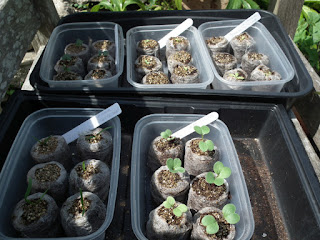
10 days ago Today Sorry about the gap in posts. I lost the battery charger for my camera and so couldn't snap what was going on and frankly it makes little sense to post about beautiful plants and not post photos. Anyway that is my excuse and I am sticking to it. Now Amazon has supplied a new charger and I am back. So much is happening in the garden, in my little plastic greenhouse and in the perspex-roofed utility room. One of the good things about photographing my plants is that it is a way to see easy progress. In the last fortnight the tomato and pepper plants in the utility room have grown like triffids. I am beginning to worry that I will run out of space for the plants before I can transfer them into the greenhouse and garden, especially as warm sunny weather is forecast for next week. Oh well. 

Seed Swap

Image
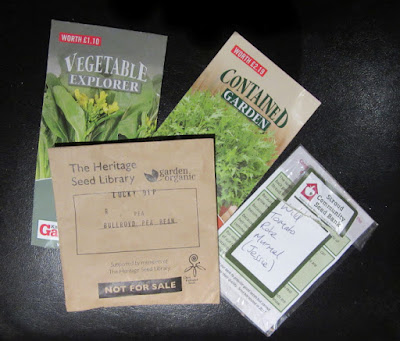
Today I went to the Seed Swap organised by the Stroud Valleys Project. The aim of the swap was to allow people to bring any surplus seeds to exchange with others. I have accumulated a load of seed packets (unopened) which had arrived on the front of gardening magazines. This seed swap was ideal for me. I took sixteen packets to the swap and I brought back four (see above).  I don't mind the imbalance, so long as the seeds get grown. I feel guilty about keeping seeds which will never be sown. Whilst sifting through the packets of seed, I got chatting to another swapper,  who turned out to be a teacher looking for seeds for the school garden. I hope she took some of mine. Stroud is a centre for environmental activism. One of the sets of seeds I took was from the Stroud Community Seed Bank. They offer a limited range of seeds, all grown by a team of volunteer seed guardians, many of the seeds are heritage varieties and there are some you are unlikely to find anywhere else,...

Plants for 2018

Image
I am counting down the days before the weather improves and I can get back into the garden. Sadly I have found the cold weather can trigger my angina, so I must be patient. But in the meantime I am planning and researching. Here is what I am hoping to grow this year: SPRING/SUMMER Borlotti beans French beans (climbing) - blauhilde, goldmarie Lablab bean Runner bean (dwarf) - hestia Crimson-flowered broad beans Carrots in raised containers - nantes, red samurai, purple sun Beetroot (yellow, bolthardy, and cylindra plus bull's blood for leave  Chilli pepper - Trinidad perfume  Hyssop Amaranthus calaloo Lettuce - various Basil Cucumber - jogger Cape gooseberry Tomatoes - rosella, karla, venus, bajaja, vilma, aztek Sweet pepper - ontara Summer savory Peas - kelvedon wonder, shiraz (mangetout), sugar bon (sugarsnap) Salsola Pattypan squash - disco Chard - rainbow swisschard,  perpetual spinach Spinach - New Zealand, red-veined, Orach Sunflower...

Lessons To Learn

Image
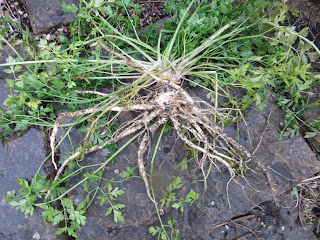
What Didn't Work Root vegetables -  either just grow lots of leaves and no root (radishes, turnips, kohlrabi) or grow loads of roots turning them into demented underground spiders (see hamburg parsley photo above). Kalettes and swiss chard  - need staking or supporting in some way in my soil, the kalettes fell over in the strong winds and one chard actually got torn from the ground. Tomatoes grown in the flower beds - too many leaves and not enough fruit. Flea beetles.  My brassica leaves were constantly being turned into lace doilies. Contrary to what some books say I had the horrid little beetles all through the growing season. As my aim is to grow brassicas partly for their appearance, the usual response of covering them with enviromesh isn't really an option. Leek moth - destroyed my leeks last year.. Generally - the garden was pretty crammed What Worked Well Beans - borlotti beans were a revelation, as were freshly picked yellow french bea...