Posts

Intruders

Image
The garden has been invaded by poppies - simple orange ones and this stunner. With the exception of one poppy plant my sister gave me, I don't know where they came from - they just appeared. I like poppies and have left them to flower, even though they are not edible. In garden centres in the Czech Republic I could have bought seeds of the opium poppy which the Czechs grow for the black seeds or "mak" which feature so prominently in Czech baking, but I wasn't sure about how they might be viewed by HM Customs.

Amelanchier not just pretty flowers

Image
Many gardens in the UK have an amelanchier. It is grown because of its delightful white flowers and vibrant autumn colour. It is seldom grown for its edible fruits, but it should be. In its native North America the plant is known as saskatoon or juneberry. I first came across the berries in my Czech friend's garden. "Help yourself," she said, "there are loads of them." She was right, her bush was covered with red, purple berries. I tried one and could not stop myself reaching for another and another - the berries were and are delicious. There is no tartness or unpleasant aftertaste, unlike some other superfoods I could name. How Amelanchier berries haven't been promoted as a superfood I do not know. They are incredibly good for you - vitamin pills on a bush. They are said to have more antioxidants than blueberries, and are packed full of vitamin C, manganese, magnesium, iron, calcium potassium, copper and carotene. Never has being good for your health...

Pea flowers

Image
My sister loves sweet peas. She gave me a dozen plants or so, which I have planted in pots to grow up home-made hazel teepees. They will sit on the terrace near to the garden seat, where I drink my morning coffee and where I will be able to enjoy their scent. But this is an edible garden and flowers of the pea plants are already putting on a spectacular show. I don't what has happened, but this year's pea plants are twice the size they were last year. The white Kelvedon Wonder blooms are dainty and delightful (see below). But the stars of the show are the purple and pink flowers of the shiraz mangetout (top). And when they are finished I get delicious purple pods. We had our first taste of them yesterday. Summer and summer harvests are beginning. Yippee!

Humblebee

Image
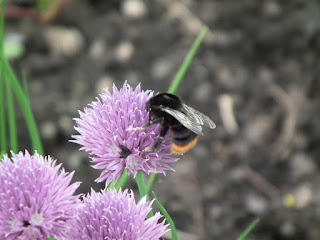
The garden is abuzz. A collection of bumblebees is clambering over the chive flowers - one clump has six on it. Over on the poached egg plants there are solitary bees and hoverflies. My worries about a lack of bees after the storm have been proved redundant. The clumps of flowers (edible and inedible) that I scattered around the garden among the vegetables and fruit are doing their magic and drawing pollinators to the garden. But of all the pollinators my favourite is the red-tailed bumblebee or as we call it in Gloucestershire the red-arsun. When I was a child I spent many of my summer days at a cottage under Humblebee Wood. It was idyllic, a place of sunshine, adventure and a laughter. It was a place of history with a Roman villa mosaic in a hut in a neraby copse and a Stone Age longbarrow overlooking the valley and it was a place of nature with fossil sea urchins in the fields and of course humblebees. Humblebee is the traditional British name for the bumblebee - humble being a...

Crimson-flowered broad beans.

Image
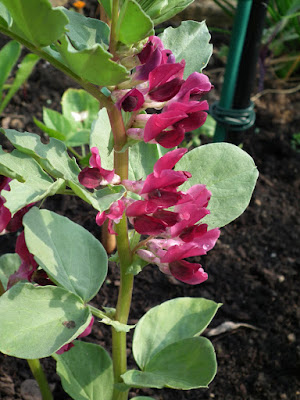
The garden has exploded in a mass of colours. The most vibrant of all the flowers are those of the crimson-flowered broad beans. No photo can do them justice, the colour is so rich and when the sunlight is behind them they glow red. This variety is so beautiful it could be grown in a flower garden. It also has a lovely scent and the bees love them. Crimson-flowered broad (fava) beans are a heritage variety, said to date back to the late 1700s. They definitely were around in 1831, featuring in a report by the Horticultural Society of London. The plants are shorter than the ordinary modern broad beans', but they are said to be less troubled by blackfly which is a blessing. I think next time I will plant them closer together or in a pot. As for the flavour I am happy to wait for the beans a while and enjoy the flowers.

My Arctic Raspberry

Image
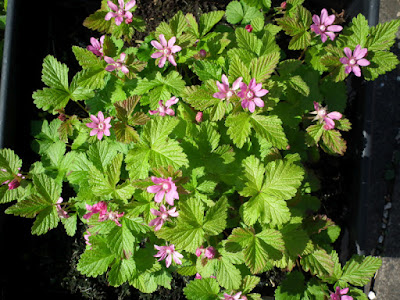
The garden is really beginning to fill up with colour and flowers. This plant is the arctic raspberry that I grow in a container at the top of the steps entering the garden. It is delightful at the moment.  When I bought the plant last year I did not know what pleasure it would give me. It was cheap at The Range and sounded interesting so I took a bet on it. Having been restrained by a small pot, it was only a little thing when I bought it and looked overwhelmed by the container I put it in. But its growth took off and even gave a harvest of sweet deep red berries in its first year. It laughed at this year's cold winter, which was no surprise given it does indeed grow in arctic conditions, and now is in full bloom. The Russians call it the Prince of Berries and I agree. 

St George's Mushrooms Arrive

Image
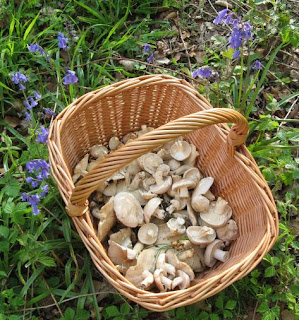
In a break from my garden posts, here is one about wild mushrooms - St George's mushrooms. St George's is one of my favourite wild mushrooms, partly because its arrival heralds the arrival of warmer weather and the opening of the mushroom season. The mushroom gets its name from the fact that it appears around St George's day (23rd April). They disappear when the weather starts to get hot in June. The best indicator of when to start looking for it is just as the bluebells start to flower. I often find it among bluebells and wild garlic. It often grows in grass alongside paths and even roads. I have even found them under a tree in a National Trust car park, but my special place for them is a traditional parkland. They are a comparatively good mushroom for beginners, as they come at a time of year when there are few mushrooms around. If St George's grew in summer or autumn even I would think twice about picking them, as the white form of the death cap and the destro...